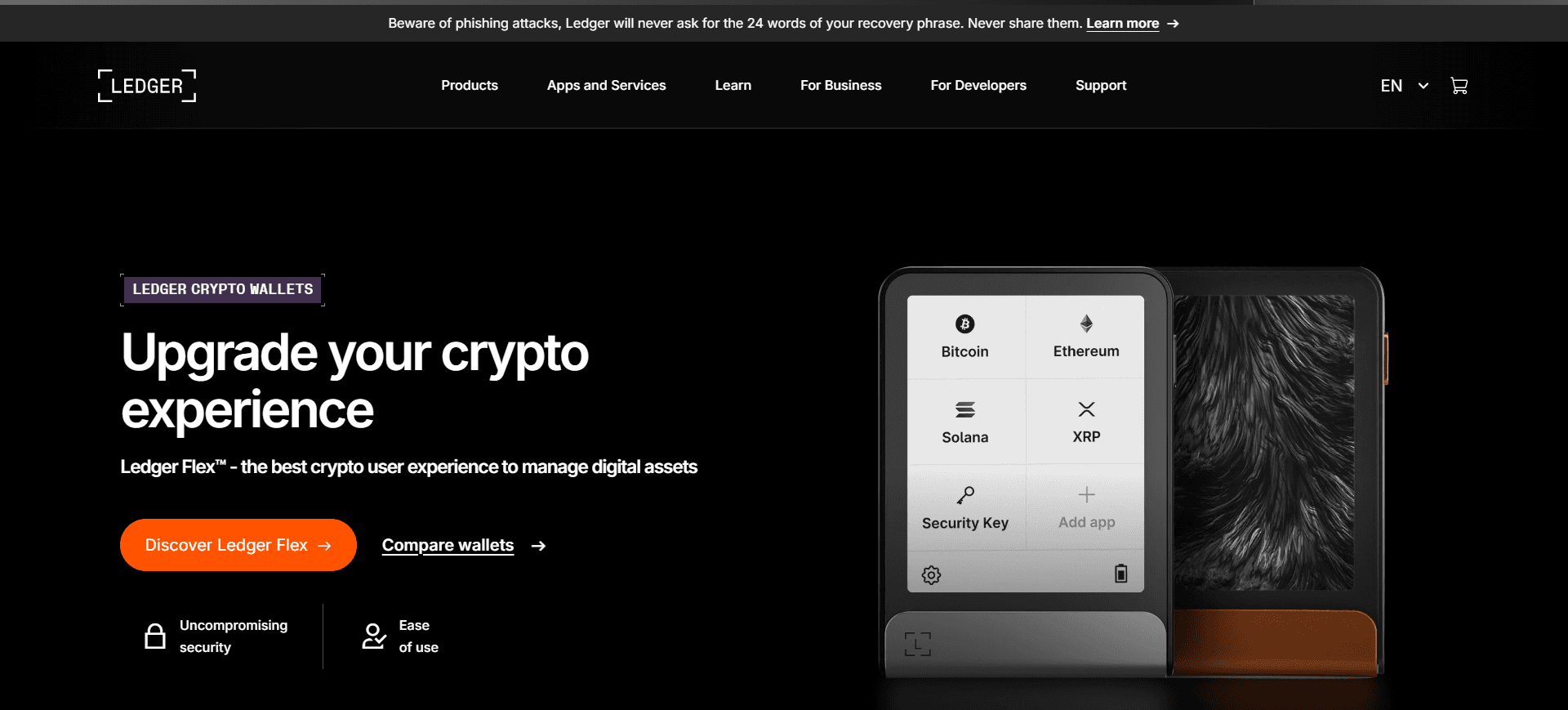
Ledger Login: Ledger Wallet
Cryptocurrency has evolved from a niche experiment into a powerful global financial ecosystem. With this growth, however, has come an increase in cyber-attacks, phishing schemes, exchange hacks, and wallet vulnerabilities. As a result, crypto users are becoming increasingly aware that safeguarding digital assets is no longer optional—it’s essential. This is where Ledger, one of the world’s most trusted hardware wallet brands, provides unmatched security.
But to use your Ledger device efficiently, you must understand how Ledger login works—what it means, how to do it safely, and the best practices every user should follow. Since Ledger devices operate differently from standard accounts and password-based systems, understanding the login process is fundamental.
This in-depth guide covers everything you need to know about Ledger login, including how it works, how to set it up, how to avoid scam login pages, how to recover your account, troubleshooting tips, and more. By the end, you will understand why Ledger login is one of the safest ways to manage crypto in 2025.
1. What Is Ledger Login?
Unlike centralized exchanges like Binance or Coinbase, Ledger does not require traditional account credentials such as:
Username
Email
Password
There is no cloud account and no server storing your private keys.
Instead, what people commonly refer to as “Ledger login” is the process of:
Connecting your Ledger hardware wallet (Nano S Plus, Nano X, or Stax)
Entering your PIN code
Unlocking your crypto accounts via Ledger Live, the official Ledger interface
This login model ensures that:
Your private keys stay offline
Only you can access your funds
No external login portal can be hacked
Ledger cannot access or recover your funds
Ledger login is essentially unlocking your hardware wallet and granting permission to Ledger Live to display your crypto balances and manage transactions.
2. How Ledger Login Differs From Regular Crypto Logins
A typical crypto account—such as an exchange wallet—uses cloud authentication. You log in using:
Email
Password
2FA (optional)
This means your crypto access depends on third-party servers, which can be hacked or shut down.
Ledger uses a device-based security model:
No email
No online password
No remote login system
Your Ledger login depends entirely on:
Your physical device
Your PIN
Your recovery phrase
Because Ledger is non-custodial, you remain the only owner of your assets.
3. Devices That Use Ledger Login
All Ledger hardware wallets use the same login system:
• Ledger Nano S Plus
Secure, budget-friendly, ideal for beginners.
• Ledger Nano X
Bluetooth-enabled, mobile-friendly.
• Ledger Stax
Premium device with curved E-ink touchscreen.
Each device requires:
Physical connection (USB or Bluetooth)
PIN entry
Ledger Live authentication
4. Step-by-Step Guide: How to Log in to Ledger (2025)
Step 1: Install Ledger Live
Before logging in, you need the Ledger Live app.
Available on:
Windows
macOS
Linux
Android
iOS
Only download from the official Ledger website or app stores to avoid fake versions.
Step 2: Open Ledger Live and Connect Your Device
Once Ledger Live is installed:
Launch the application
Plug in your Ledger device using the original USB cable
If using Ledger Nano X, you may use Bluetooth for mobile
Ledger Live will automatically detect the device.
Step 3: Enter Your PIN Code
Your Ledger device screen will ask for your PIN.
This is your first layer of security.
Only you should know your PIN
Ledger cannot recover it
Too many wrong attempts will reset the device
This acts as your “login password”, but stored offline.
Step 4: Unlock Access to Ledger Live
Once the PIN is entered:
Your device unlocks
Ledger Live syncs
Your accounts, balances, and portfolio appear
At this stage, Ledger Live can:
Display your crypto
Prepare transactions
Install apps
But Ledger Live still cannot move funds without device confirmation.
Step 5: Verify Transactions on the Device
Every action you initiate on Ledger Live must be confirmed manually on your Ledger device.
This prevents:
Remote hacks
Malware attacks
Unauthorized withdrawals
You see the transaction details on the device screen and confirm each step.
5. The Role of the Recovery Phrase in Ledger Login
Ledger login itself uses only the device and PIN, but the recovery phrase is essential for restoring access.
Your recovery phrase:
Is generated during device setup
Is NOT stored by Ledger or online
Must be kept privately and offline
Is the only way to recover your wallet if your device is lost or damaged
If you lose your phrase, Ledger cannot help you recover your funds—this ensures true self-custody.
6. Ledger Login on Mobile Devices
Mobile login is popular among users with a Ledger Nano X or Stax.
Steps:
Enable Bluetooth
Open Ledger Live Mobile
Pair your device
Enter your PIN
Grant access
Mobile login is secure because:
Bluetooth communication is encrypted
Private keys remain offline
No login credentials are stored
7. Common Ledger Login Errors and Solutions
7.1 Device Not Detected
Possible causes:
Faulty cable
Not using an official Ledger cable
Outdated Ledger Live version
USB port issues
Try:
Updating Ledger Live
Restarting both device and app
Switching USB ports
7.2 Incorrect PIN
Too many incorrect attempts will reset the device.
Use your recovery phrase to restore your wallet if reset.
7.3 Ledger Live Not Syncing
Try:
Clearing cache
Updating apps
Checking your internet connection
7.4 Bluetooth Connection Fails
Applicable to Nano X/Stax:
Restart Bluetooth
Unpair and repair device
Update firmware
8. Importance of PIN in Ledger Login Security
The PIN is the one thing preventing unauthorized access to your wallet.
A strong Ledger PIN should:
Be 6–8 digits
Be unique
Not resemble personal information
If someone steals your device but doesn’t know the PIN, they cannot access funds.
9. Avoiding Fake Ledger Login Websites
The biggest danger in crypto is phishing.
Scammers create fake websites like:
ledger-login.com
ledgerlive-app.net
ledger-account.io
Ledger never asks you to:
Log in online
Enter your recovery phrase
Share your PIN
Always use the official website only.
10. Ledger Login and Firmware Updates
To keep login secure, always install the latest firmware updates.
New updates:
Fix security threats
Add new features
Improve device performance
Firmware updates require:
Connecting your device
Unlocking it
Confirming updates
11. Ledger Login and App Management
Ledger devices support many blockchain apps:
Bitcoin
Ethereum
Solana
XRP
BNB
Cardano
5000+ tokens
Logging in allows you to:
Install apps
Uninstall apps
View crypto accounts
Removing an app does NOT remove your funds.
12. Using Ledger Login to Send/Receive Crypto
After logging in, you can:
Receive funds by sharing your address
Send funds by confirming on the device
Every transaction requires:
Ledger Live preparation
Ledger device confirmation
This makes unauthorized transfers virtually impossible.
13. Ledger Login for Staking Crypto
Ledger Live supports staking for multiple networks:
Ethereum
Cosmos
Solana
Polkadot
Tezos
Logging in lets you:
Delegate your tokens
View rewards
Claim staking gains
All staking actions require device approval.
14. Ledger Login and NFT Management
Ledger Live includes NFT support for:
Ethereum
Polygon
Users can:
View NFTs
Send NFTs
Store them securely
Logging in ensures NFTs remain protected from phishing attacks.
15. Ledger Login and Web3 Access
Ledger can connect securely to Web3 platforms such as:
MetaMask
Uniswap
OpenSea
PancakeSwap
You use Ledger login first, then connect the device to the dApp.
This protects you from:
Malicious smart contracts
Browser hacks
Fake Web3 sites
16. Troubleshooting Ledger Login on Different Operating Systems
Windows
Disable conflicting drivers
Use Windows Update
Install microcontroller drivers
MacOS
Allow Ledger Live through system security
Try different ports
Linux
Requires additional permission rules for USB access.
Mobile (iOS/Android)
Update Bluetooth firmware
Reset ledger pairing
17. How Safe Is Ledger Login?
Ledger login is among the safest authentication systems in the crypto world due to:
PIN protection
Secure Element chip
Offline private keys
Physical confirmation of actions
No online login pages
Even if your computer is infected, your assets remain safe because transactions must be confirmed physically.
18. Best Practices for a Secure Ledger Login
✔ Use a strong PIN
Never share it with anyone.
✔ Never enter your recovery phrase online
No legitimate Ledger login page will ask for it.
✔ Always double-check URLs
Bookmark the official Ledger website.
✔ Keep firmware updated
Reduces known vulnerabilities.
✔ Store recovery phrase safely
Offline, secure, and never photographed.
✔ Use only verified cables and devices
Fake hardware accessories can be compromised.
19. Lost Access? How to Recover Ledger Login
If you cannot log in because:
Your device was lost
Your device was damaged
You forgot your PIN
You can restore your wallet using:
A new Ledger device
Your 24-word recovery phrase
This instantly regenerates your:
Accounts
Balances
Tokens
NFTs
Just like before.
20. Why Ledger Login Is the Future of Crypto Security
Ledger’s login system represents the future of crypto authentication because it eliminates:
Passwords
Online accounts
Server breaches
Human error in centralized systems
This shifts power back to users, giving them full self-custody without compromising ease of use.
Conclusion
In 2025, as cryptocurrency becomes more mainstream, secure storage and safe access methods are more important than ever. Ledger login provides one of the strongest authentication models in the blockchain space, combining the power of a physical hardware wallet with an intuitive software interface.
Unlike traditional logins, Ledger’s system ensures:
Your private keys remain offline
You retain full ownership of your crypto
No online account can be hacked
Every transaction must be physically confirmed