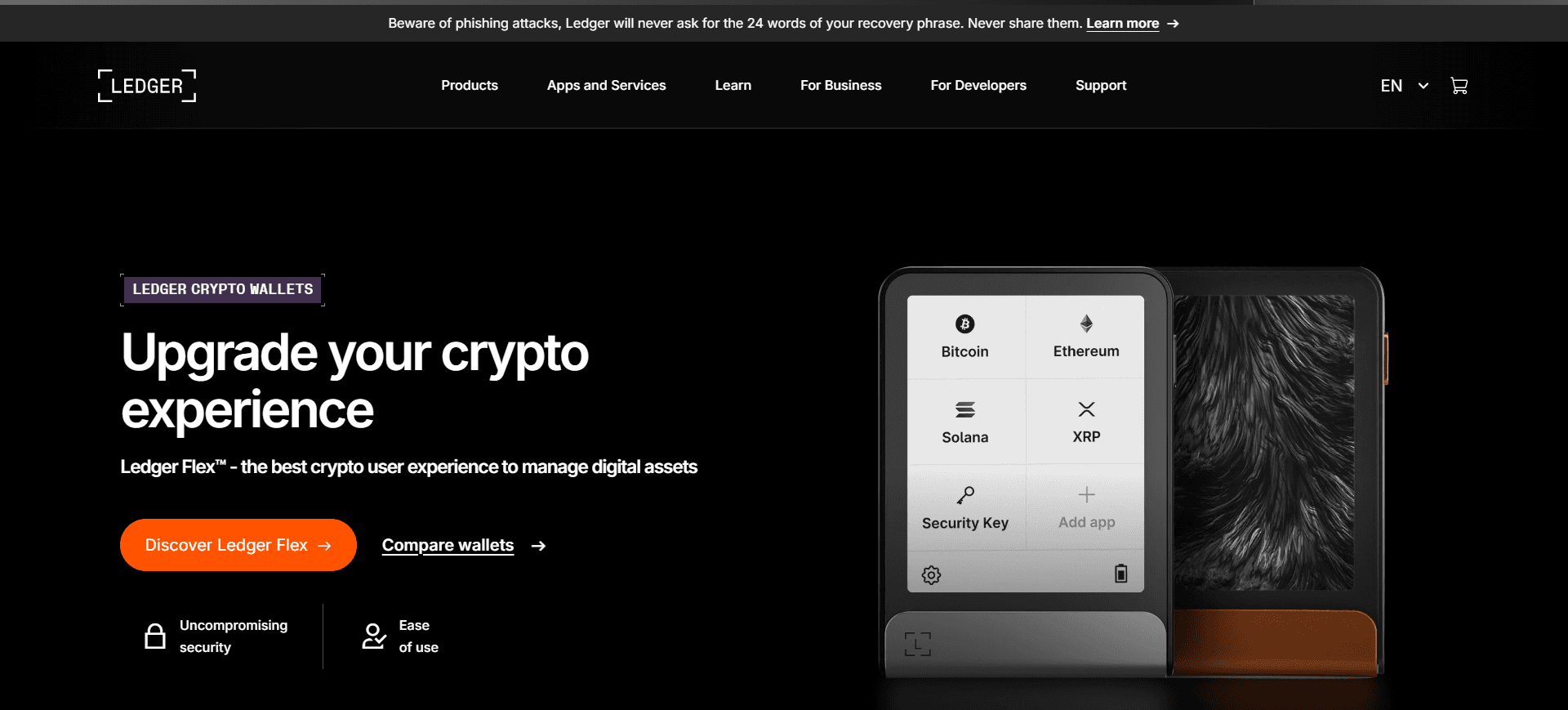
Ledger Login: Securely Accessing Your Ledger Wallet
The rise of cryptocurrency has created new opportunities, new wealth, and—unfortunately—new risks. As millions of users invest in digital assets, security remains the top concern. Exchange hacks, phishing scams, and malware attacks have shown that relying on centralized platforms for wallet access can be dangerous. This is why hardware wallets, especially Ledger devices, have become the gold standard for safe crypto storage.
But unlike regular online accounts, Ledger doesn’t use traditional login credentials. There is no email, no password, and no web login portal. Instead, what users refer to as Ledger login is a secure, offline authentication process that ensures only the legitimate owner can access their digital assets. Understanding this process—and mastering it—is essential for anyone using a Ledger Nano S Plus, Ledger Nano X, or Ledger Stax in 2025.
This comprehensive guide explains everything you need to know about Ledger login, how to do it correctly, how to avoid scams, how to troubleshoot issues, and why this login model is considered one of the safest systems in the crypto industry.
1. What Does “Ledger Login” Really Mean?
When people search online for “Ledger login,” they often expect:
A login page
A website dashboard
An online account system
But Ledger works differently.
Ledger Login = Unlocking Your Hardware Wallet + Connecting to Ledger Live
Instead of logging into a website, you access your crypto through:
Your Ledger hardware wallet
Your PIN code
The Ledger Live app (desktop or mobile)
You log in locally via the device—not online.
This protects you from:
Phishing websites
Database leaks
Password hacks
Cloud-based theft
Ledger never stores your:
Private keys
PIN
Recovery phrase
Wallet data
You remain the sole owner of your assets.
2. Why Ledger Doesn’t Use Traditional Login Systems
Most platforms use:
Username
Password
2FA
Email verification
Cloud backups
This makes accounts dependent on third-party servers. If the server is hacked or goes offline, users lose access.
Ledger takes a radically different approach:
✔ Private keys stay on the hardware device only
✔ No cloud accounts exist
✔ No Ledger login website exists
✔ PIN and recovery phrase never leave the device
This model ensures maximum security and self-custody—two principles at the heart of cryptocurrency.
3. Ledger Login Requirements
To log into your Ledger wallet, you need:
1. A Ledger Hardware Device
Ledger Nano S Plus
Ledger Nano X
Ledger Stax
2. Your Unique PIN Code
Created during device setup.
Only you know it.
3 wrong attempts = device reset.
3. Ledger Live App
The official interface for managing:
Crypto accounts
NFTs
Staking
Portfolio tracking
App updates
Ledger Live is available on:
Windows
macOS
Linux
Android
iOS
4. (Optional) Recovery Phrase
Only required if:
Device is lost
Device resets
You need to restore your wallet
The recovery phrase is not used during day-to-day login.
4. How to Log Into Ledger: Step-by-Step Guide (2025)
Below is the complete login flow.
Step 1: Download Ledger Live
Visit the official website and install Ledger Live.
Important:
Ledger never offers a browser-based login.
Never trust websites asking for your phrase or PIN.
Step 2: Open Ledger Live
Launch the app.
The dashboard will ask you to connect your Ledger device to proceed.
Step 3: Connect Your Ledger Device
Use:
USB cable (Nano S Plus, Nano X, Stax)
OR Bluetooth for mobile (Nano X, Stax)
Ledger Live will display a connection message once it detects the device.
Step 4: Enter Your PIN on the Device
The PIN is your local login.
It:
Unlocks the secure chip
Grants access to your wallets
Must be physically entered on the device
Ledger Live cannot access your PIN or bypass it.
Step 5: Your Accounts Load in Ledger Live
After the device is unlocked:
Ledger Live synchronizes
Your crypto balances display
You can send/receive coins
You can stake assets
You can manage NFTs
Every transaction still requires physical confirmation on the device.
5. How Ledger Login Works Technically
Here’s the behind-the-scenes process that keeps you safe:
Ledger Live communicates with blockchain nodes.
It prepares a transaction but cannot sign it.
The Ledger device signs the transaction internally using:
Secure Element chip
Offline private keys
The signed transaction returns to Ledger Live.
Ledger Live broadcasts it to the network.
The private key:
Never leaves the device
Cannot be copied
Cannot be extracted
This is why Ledger is trusted by millions worldwide.
6. Logging In on Mobile vs. Desktop
Mobile Login (Nano X & Stax)
Uses encrypted Bluetooth.
Safe from:
Man-in-the-middle attacks
Remote access attempts
Desktop Login (All Ledger Devices)
Uses USB.
Most stable connection for:
Transactions
Firmware updates
App installations
Both modes require PIN entry directly on the device.
7. Why Ledger Login is One of the Safest Systems in Crypto
✔ No online login = No phishing target
Hackers cannot steal login credentials because there are none.
✔ PIN required for local access
Prevents unauthorized wallet entry.
✔ Recovery phrase never enters a computer
Eliminates digital risk.
✔ Hardware isolation
Private keys never touch the internet.
✔ Transaction verification on the device
Even if your PC is hacked, transactions must be approved physically.
This model beats:
Hot wallets
Exchange wallets
Cloud-based software wallets
8. Avoiding Fake Ledger Login Websites
Search engines often show malicious ads for fake Ledger sites.
IMPORTANT:
Ledger has no online login portal.
Any site asking for:
PIN
Recovery phrase
Private key
is a scam.
Examples of fake sites:
ledgerlogin.com
ledgerlive-web.net
ledger-verify.org
ledgerrecoverportal.com
The real Ledger login only happens through the Ledger device + Ledger Live app.
9. Ledger Login and Recovery Phrase—How They Connect
The PIN = daily login credential
The Recovery Phrase = master key
You need the recovery phrase only when:
Your device is wiped
Device is lost, stolen, or damaged
You buy a new Ledger hardware wallet and restore your accounts
Never enter the recovery phrase:
Into Ledger Live
Into websites
Into emails
Into mobile apps
Ledger will never ask for it.
10. Troubleshooting Common Ledger Login Problems
Even secure systems can have issues. Here are common fixes:
10.1 Device Not Connecting
Possible reasons:
Faulty cable
USB port issue
Outdated Ledger Live
Damaged device
Fix:
Try another USB port
Restart Ledger Live
Update the app
Try another cable
10.2 Incorrect PIN
3 wrong attempts → device resets.
If this happens:
Restore using your recovery phrase
Your funds will reappear
10.3 Ledger Live Not Detecting Your Device
Fixes:
Change cable
Disable VPN
Use official Ledger cable
Restart the device
10.4 Bluetooth Issues (Nano X / Stax)
Fixes:
Remove pairing and re-pair
Restart Bluetooth
Keep device close to the phone
11. Ledger Login for Sending Crypto
To send crypto:
Log into Ledger (PIN + connection)
Open Ledger Live
Enter recipient address
Preview transaction
Confirm on the Ledger device
Funds only move after physical approval.
12. Ledger Login for Receiving Crypto
To receive:
Log into Ledger
Open Ledger Live
Generate receiving address
Verify the address on the device
Share it securely
Always verify addresses on the Ledger device to avoid malware manipulation.
13. Ledger Login for Staking
Ledger Live supports staking for:
ETH
SOL
DOT
ATOM
ADA
XTZ
Login allows you to:
Delegate tokens
View rewards
Claim staking income
No staking action happens without device approval.
14. Ledger Login for NFT Management
Ledger provides secure NFT storage for:
Ethereum
Polygon NFTs
After logging in, you can:
View NFT metadata
Send/receive NFTs
Store them offline
This protects NFTs from wallet drainer exploits and phishing links.
15. Ledger Login for Web3 and DeFi Apps
Ledger can connect to Web3 apps like:
MetaMask
Uniswap
OpenSea
PancakeSwap
Ledger Extension (browser)
Login steps:
Connect Ledger to Ledger Live
Bridge to Web3 wallet
Sign Web3 transactions on the Ledger device
This prevents:
Malicious contract approvals
Fake dApp attacks
Browser hijacking
16. Advanced Ledger Login Security Features
Secure Element Chip
Bank-grade security chip protecting private keys.
Genuine Check
Verifies whether your Ledger device is authentic.
BOLOS Operating System
Ledger’s proprietary OS isolates each crypto application.
Offline Signatures
Transactions are signed offline, impossible for malware to tamper.
17. How to Restore Ledger Login Access (Lost or Damaged Device)
If the device is:
Broken
Lost
Stolen
Reset
You can recover access using:
A new Ledger device
Your 24-word recovery phrase
After restoration, all accounts reappear exactly as before.
Your crypto remains safe because it lives on the blockchain, not on the device.
18. Best Practices for Secure Ledger Login in 2025
✔ Use a strong PIN
Avoid predictable patterns.
✔ Keep your recovery phrase offline
No photos, notes, or digital storage.
✔ Don’t share your Ledger device
It is your physical login key.
✔ Never enter recovery phrase into Ledger Live
It’s only for device restoration.
✔ Bookmark official Ledger websites
To avoid phishing ads.
✔ Keep firmware and Ledger Live updated
Ensures optimal safety.
19. Why Ledger Login Will Continue to Lead Crypto Security
The security model Ledger uses aligns perfectly with the principles of decentralization:
No trust in third parties
No cloud dependency
No online credentials
Pure self-custody
As crypto adoption increases in 2025 and beyond, Ledger’s login method represents the future of secure digital identity.
Conclusion
Ledger login is not a typical online login—it is an offline, device-based, secure authentication process that ensures only you can access your crypto. By combining a physical hardware wallet, a PIN system, and the Ledger Live app, Ledger creates one of the most robust and hacker-proof login systems available in the modern crypto ecosystem.
You maintain:
Full ownership
Full control
Maximum protection
Understanding how Ledger login works is crucial for keeping your digital assets secure in an increasingly risky digital world.